
Pollen or Algae? How to Tell What’s Really in Your Pool
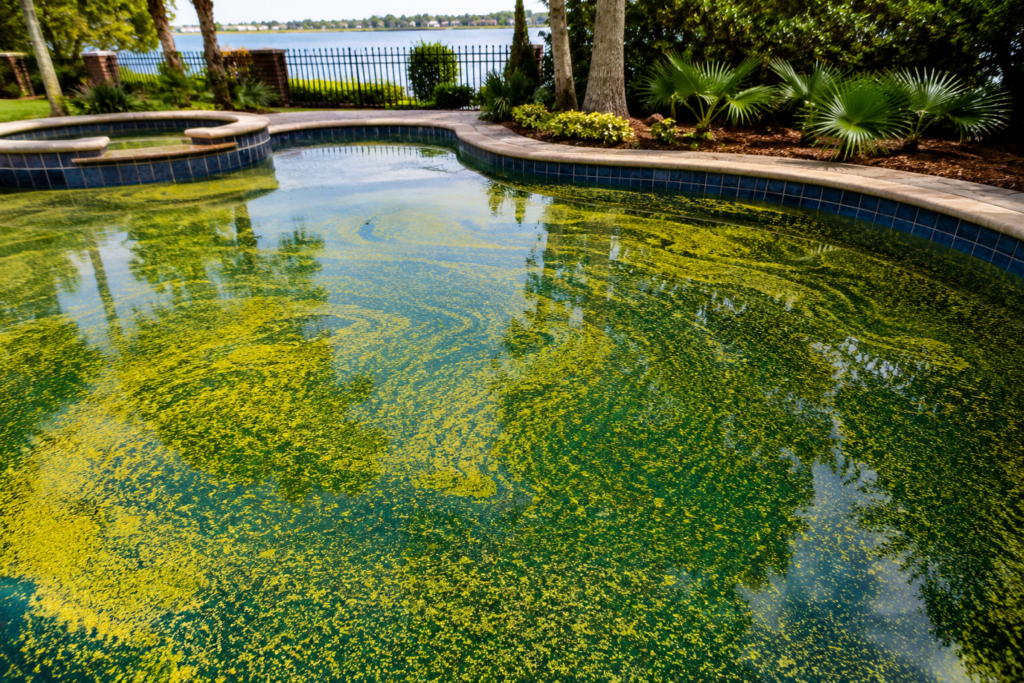
Every spring, many pool owners walk outside to find a yellow or green coating on their pool and immediately assume the worst, an algae outbreak. But in many cases, the culprit is actually pollen. Knowing the difference can save you time, money, and unnecessary chemical treatments.
What Does Pollen Look Like?
Pollen often appears as a fine yellow dust floating on the surface of the water or collecting in corners and along the waterline. It can also settle on steps and ledges, especially after a windy day. Because it floats so easily, pollen usually disperses when disturbed.
What Does Algae Look Like?
Algae is typically slimy and clings to pool surfaces. It may appear green, yellow, or even black depending on the type. Unlike pollen, algae often grows on walls, steps, and shady areas where circulation is poor. If left untreated, algae can quickly spread and make the water cloudy.
A Simple Test
Try brushing the affected area with a pool brush. If the material floats away like dust and returns to the surface, it’s likely pollen. If it sticks to the surface or creates a cloudy plume in the water, algae could be developing.
How to Handle Pollen
For pollen, regular skimming, vacuuming, and proper filtration are usually enough to keep it under control. Running your pump longer during heavy pollen days and cleaning your filter more frequently can also make a big difference.
When to Call a Professional
If you’re unsure whether you’re dealing with pollen or algae, it’s always better to have your pool inspected before adding extra chemicals. Proper diagnosis can prevent unnecessary treatments and help keep your water balanced throughout the spring season.